
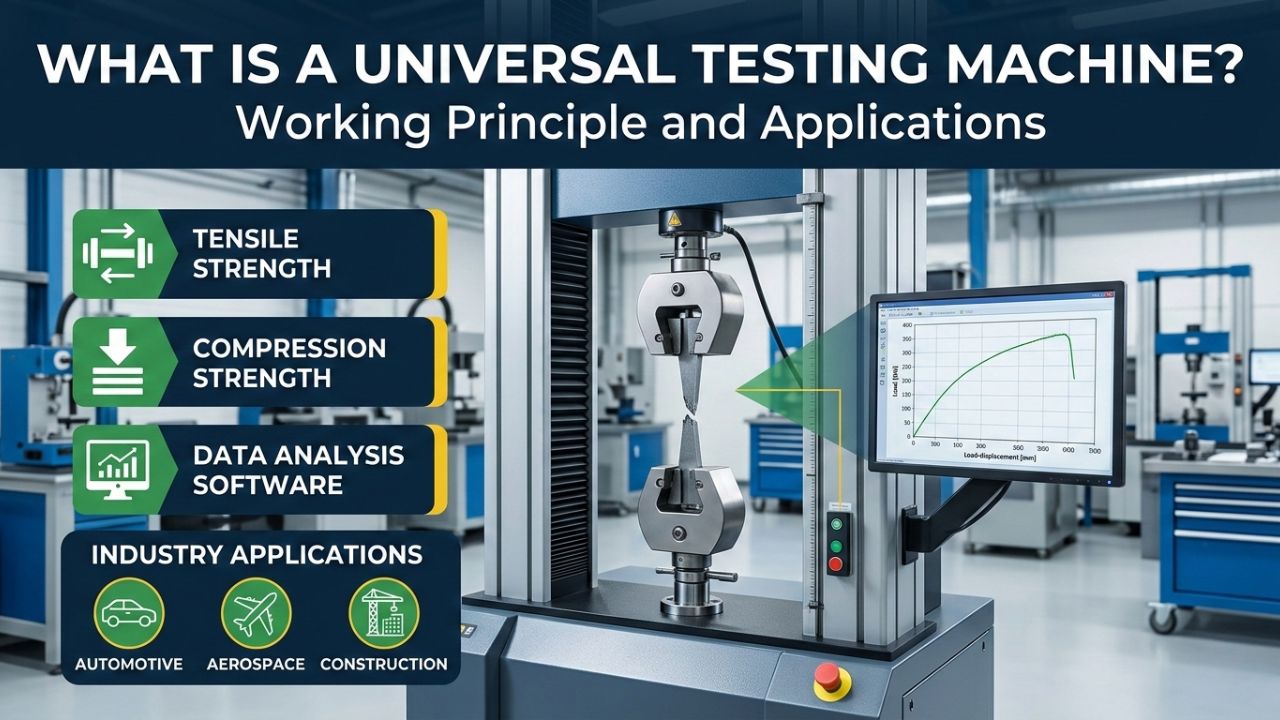
Universal Testing Machine: Working Principle & Applications
Material testing plays a crucial role in modern manufacturing, construction, engineering, and research industries. Before materials such as metals, plastics, rubber, and composites are used in real-world applications, their strength, durability, and performance must be tested accurately. One of the most important machines used for this purpose is the Universal Testing Machine (UTM).
A Universal Testing Machine is widely used in laboratories and industries to evaluate the mechanical properties of materials such as tensile strength, compression strength, bending strength, and shear strength. With the advancement of technology, Computerized Universal Testing Machines have made material testing more accurate, efficient, and automated.
In this article, we will explore what a Universal Testing Machine is, its working principle, components, and applications across different industries.
What is a Universal Testing Machine?
A Universal Testing Machine (UTM) is a mechanical testing system used to measure the strength and mechanical properties of materials under different types of loads. It is capable of performing multiple tests such as tensile testing, compression testing, bending tests, and shear tests.
The reason it is called “universal” is because a single machine can perform various types of tests on different materials.
UTMs are commonly used in:
Material testing laboratories
Engineering colleges and research centers
Construction testing labs
Manufacturing industries
Automotive and aerospace industries
Modern Computerized Universal Testing Machines are equipped with advanced software that allows engineers to monitor and analyze test results in real time.
Companies specializing in material testing equipment manufacturing provide high-quality machines designed to meet international testing standards. To learn more about leading manufacturers and testing solutions, you can visit the official website:
https://universal-motion.com/
Universal Testing Machine Working Principle
The working principle of a Universal Testing Machine is based on applying controlled tensile or compressive force to a material specimen until it deforms or breaks. The machine measures how the material responds to stress and records important data such as load, displacement, strain, and deformation.
The testing process typically involves the following steps:
1. Sample Preparation
A specimen of the material is prepared according to testing standards such as ASTM or ISO. The shape and dimensions of the sample depend on the type of test being performed.
2. Mounting the Specimen
The specimen is placed between two grips or fixtures inside the testing machine. These grips hold the sample firmly during the testing process.
3. Application of Load
The Universal Testing Machine applies controlled force through a moving crosshead. This force can be tensile (pulling) or compressive (pushing).
4. Measurement and Data Collection
Sensors and load cells measure the applied force and the resulting deformation of the material. The data is recorded digitally in computerized systems.
5. Failure or Deformation Analysis
The test continues until the material reaches its breaking point or deformation limit. The results are then used to determine properties such as tensile strength, yield strength, and elongation.
This process helps engineers understand how materials behave under different loads and conditions.
Components of a Universal Testing Machine
A Universal Testing Machine consists of several important components that work together to perform accurate material testing.
Load Frame
The load frame is the main structure of the machine. It supports all the components and provides the necessary stability during testing.
Crosshead
The crosshead moves up or down to apply tensile or compressive force on the specimen.
Load Cell
The load cell measures the amount of force applied to the specimen during the test.
Grips and Fixtures
Grips hold the material sample firmly during tensile testing, while fixtures are used for compression and bending tests.
Extensometer
An extensometer measures the deformation or elongation of the specimen during the test.
Control System
Modern Computerized Universal Testing Machines are equipped with digital control systems and software for real-time monitoring and analysis.
These components ensure accurate and reliable testing results.
Types of Universal Testing Machines
There are different types of Universal Testing Machines depending on the method used to apply force.
Hydraulic Universal Testing Machine
Hydraulic UTMs use hydraulic systems to generate high levels of force. These machines are commonly used for testing heavy materials like metals and construction materials.
Electromechanical Universal Testing Machine
Electromechanical machines use electric motors and screw mechanisms to apply force. They are commonly used in laboratories and research facilities.
Computerized Universal Testing Machine
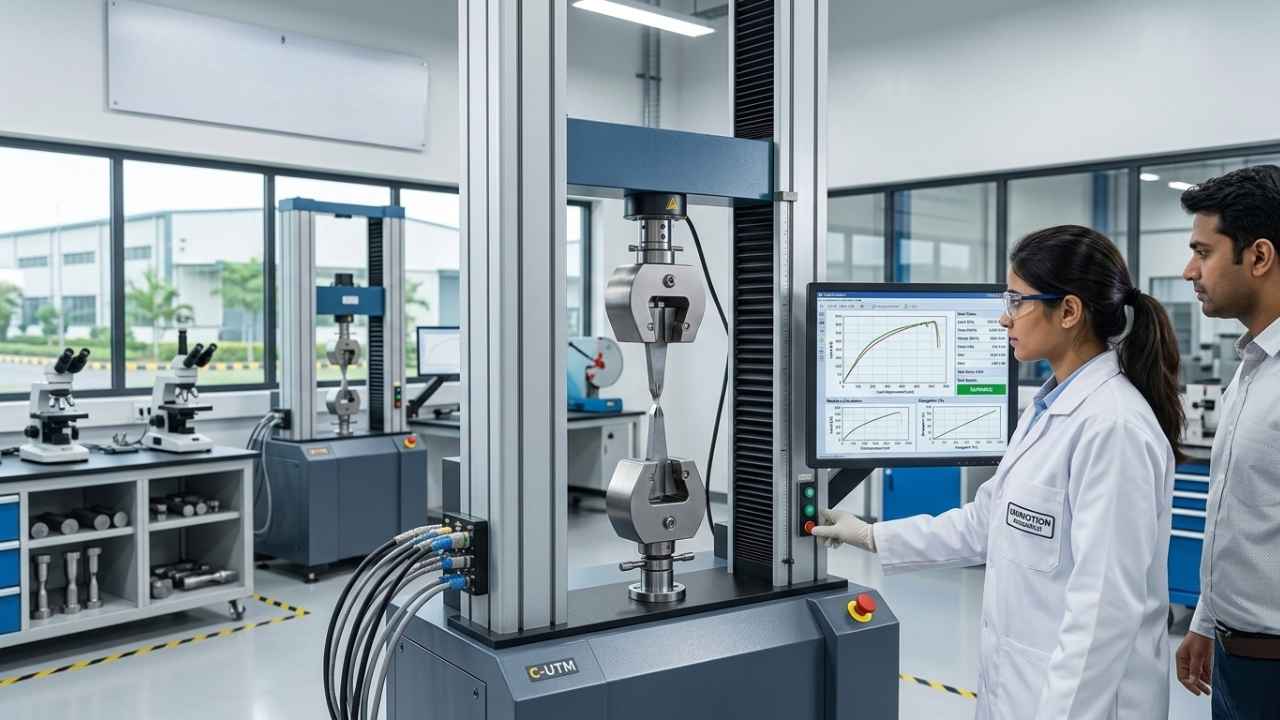
A Computerized Universal Testing Machine integrates digital software and automated controls to provide accurate testing results and data analysis.
These advanced systems improve testing efficiency and reduce human error.
Applications of Universal Testing Machines
The Universal Testing Machine is widely used across multiple industries for evaluating material properties.
1. Material Testing Laboratories
UTMs are essential in material testing labs for determining tensile strength, compression strength, and bending strength of materials.
2. Construction Industry
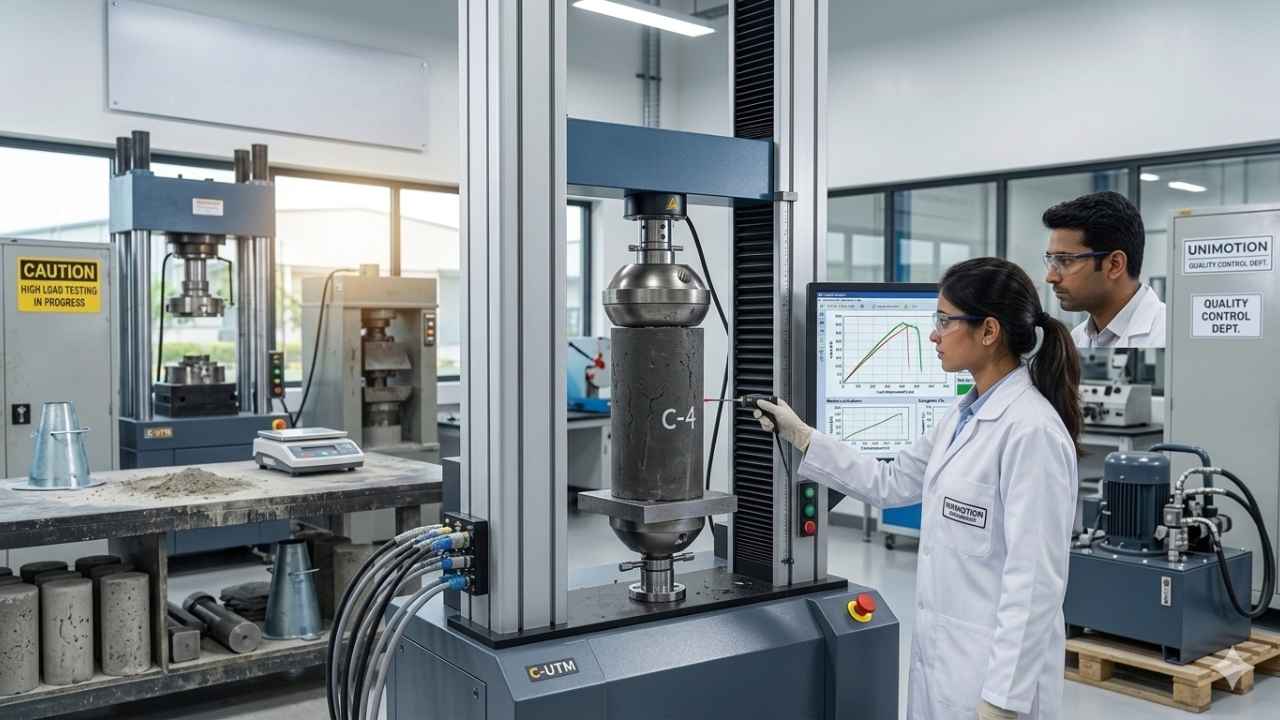
Construction companies use UTMs to test materials like concrete, steel bars, and building components to ensure structural safety.
3. Automotive Industry
Automotive manufacturers test metal components, rubber parts, and plastic materials to ensure durability and safety.
4. Aerospace Industry
In aerospace applications, materials must withstand extreme conditions. UTMs are used to test the strength of aerospace materials and components.
5. Research and Development
Universities and research institutes use Universal Testing Machines to study material properties and develop new materials.
6. Manufacturing Industry
Manufacturers use UTMs to maintain quality control and ensure products meet required strength and performance standards.
Universal Testing Machine vs Tensile Testing Machine
A Tensile Testing Machine is designed specifically for performing tensile tests, whereas a Universal Testing Machine can perform multiple types of tests including tensile, compression, bending, and shear testing.
Key Differences
| Feature | Universal Testing Machine | Tensile Testing Machine |
|---|---|---|
| Testing Type | Multiple testing methods | Tensile testing only |
| Applications | Laboratories and industries | Mainly tensile strength testing |
| Flexibility | High | Limited |
Because of its versatility, most laboratories prefer using Universal Testing Machines instead of standalone tensile testing machines.
Benefits of Computerized Universal Testing Machines
Modern Computerized Universal Testing Machines provide several advantages compared to traditional testing equipment.
High Accuracy
Advanced sensors and digital controls ensure precise measurement of force and deformation.
Automated Testing
Computerized systems allow automated testing procedures, reducing manual effort.
Data Analysis
Testing software generates detailed reports and graphs for better analysis.
Improved Efficiency
Automation speeds up testing processes and improves laboratory productivity.
Compliance with Standards
These machines are designed to comply with international testing standards such as ASTM, ISO, and BIS.
Importance of Universal Testing Machines in Quality Control
Quality control is essential in every manufacturing industry. A Universal Testing Machine helps manufacturers ensure that materials meet required strength and durability standards.
By performing accurate material testing, industries can:
Improve product reliability
Ensure safety in construction and engineering applications
Reduce product failures
Maintain compliance with quality standards
Testing machines are also used alongside other equipment such as Impact Testing Machines, Compression Testing Machines, and Hardness Testers to perform comprehensive material analysis.
Choosing the Right Universal Testing Machine
Selecting the right Universal Testing Machine depends on several factors.
Testing Requirements
Determine whether the machine will be used for tensile testing, compression testing, bending tests, or multiple testing methods.
Load Capacity
Choose a machine with appropriate load capacity based on the material being tested.
Accuracy and Precision
High-quality sensors and load cells ensure accurate results.
Software Integration
Modern computerized machines offer advanced testing software for data analysis.
Manufacturer Reliability
Working with experienced manufacturers ensures long-term reliability and service support.
To explore advanced material testing machines and solutions, you can visit the official website:
https://universal-motion.com/
About Universal Motion – Material Testing Machine Manufacturer
Universal Motion is a reputed manufacturer and supplier of material testing machines and engineering laboratory equipment. The company provides a wide range of testing solutions including dynamic testing machines, creep testing machines, soil testing equipment, and concrete testing equipment.
With consistent quality and advanced technology, Universal Motion has become a trusted name among industries, laboratories, and research institutions.
Learn more about the company and its expertise here:
https://universal-motion.com/about-us/
Contact Universal Motion for Material Testing Solutions
If you are looking for reliable Universal Testing Machines, Tensile Testing Machines, Hardness Testers, or other material testing equipment, Universal Motion provides high-quality solutions designed to meet industry standards.
Their team of experts helps industries and laboratories choose the right testing equipment based on their specific requirements.
For product inquiries, technical support, or custom testing solutions, you can contact the team here:
https://universal-motion.com/contact-us/
Frequently Asked Questions (FAQs)
1. What is a Universal Testing Machine used for?
A Universal Testing Machine (UTM) is used to test the mechanical properties of materials such as tensile strength, compression strength, bending strength, and shear strength. It helps industries and laboratories evaluate the durability and performance of materials like metals, plastics, rubber, and composites.
2. How does a Universal Testing Machine work?
A Universal Testing Machine works by applying controlled tensile or compressive force to a material specimen until it deforms or breaks. Sensors and load cells measure the applied force and displacement, while computerized systems record and analyze the testing data.
3. What materials can be tested using a Universal Testing Machine?
A Universal Testing Machine can test a wide range of materials including metals, plastics, rubber, composites, textiles, and construction materials like concrete and steel. It is widely used in material testing laboratories and industrial quality control processes.
4. What is the difference between a Universal Testing Machine and a Tensile Testing Machine?
A Universal Testing Machine can perform multiple tests such as tensile, compression, bending, and shear tests. In contrast, a Tensile Testing Machine is specifically designed to measure the tensile strength of materials.
5. Why is a Universal Testing Machine important in material testing?
A Universal Testing Machine is important because it helps industries ensure the strength, durability, and safety of materials used in manufacturing and construction. It also helps manufacturers maintain quality standards and reduce product failures.
Conclusion
A Universal Testing Machine is one of the most essential tools used in material testing laboratories and industrial quality control processes. By evaluating mechanical properties such as tensile strength, compression strength, and deformation, UTMs help engineers ensure the reliability and safety of materials used in various applications.
With the advancement of technology, Computerized Universal Testing Machines have significantly improved testing accuracy, efficiency, and data analysis capabilities. These machines play a crucial role in industries such as construction, manufacturing, automotive, aerospace, and research.
Choosing a reliable manufacturer and high-quality testing equipment is important to achieve accurate results and maintain industry standards. Universal Motion continues to provide advanced material testing solutions that support industries in maintaining product quality and performance.